

About us
Center of Trustworthy AI for Life Sciences is an International Research Agenda project at the University of Warsaw. The Center develops trustworthy, efficient and interpretable AI methods for medicine and the life sciences. We build new algorithms for analysing multimodal data, including EEG signals, clinical descriptions, text, images and other biological measurements. Our goal is to create AI systems that do not only provide predictions, but also explain their decisions, quantify uncertainty and remain reliable when data are noisy, incomplete or limited.
A central focus of the Center is the automated analysis of EEG signals. EEG is one of the most important clinical tools for studying brain function and diagnosing neurological and neurodegenerative disorders, but it is still difficult to analyse at scale because the signal is complex, noisy and highly variable. We will develop and validate new AI technologies using access to one of the world’s largest EEG resources, containing over 250,000 clinical recordings and more than 10,000 repeated examinations of individual patients, together with medical descriptions and diagnostic information.
The programme is built around four closely connected research groups.
Artificial Intelligence for Human Biology lead by dr hab. Jacek Rogala develops and validates AI methods for biological and clinical data, with a special focus on EEG. The group connects algorithmic development with medical interpretation and clinical validation, ensuring that the technologies created in the programme address real diagnostic needs.
Effectiveness of Foundation Models, led by Prof. Błażej Miasojedow develops efficient AI systems and foundation models for multimodal data. The group focuses on scalable architectures, mixture-of-experts models, distributed training, model distillation and fast inference, so that advanced AI can be used in practical and cost-effective applications.
Mathematical Foundation of AI, led by Prof. Anna Gambin, develops mathematically grounded methods for reliable and explainable prediction. The group works on feature selection, uncertainty quantification, optimal transport and methods that allow AI systems to assess the confidence and risk of their own outputs.
Topological Features of Data, led by Dr. hab. Paweł Dłotko, develops topological, geometric and statistical methods for extracting meaningful structure from complex data. The group uses topological data analysis to build informative features for AI systems and to better understand how models make decisions, when they fail and how they can be made safer.
What makes this agenda distinctive is the close integration of advanced mathematics, modern AI and real biomedical data. The four groups work on a shared technological pipeline: from data quality control and feature extraction, through efficient model construction, to uncertainty analysis, explainability and clinical validation. This structure allows the programme to address problems where standard AI often struggles: small datasets, heterogeneous clinical sources, missing data, domain shifts and high levels of noise.
The long-term ambition of Center of Trustworthy Artificial Intelligence for Life Sciences is to create AI technologies that can support earlier detection of disease, improve the safety and reliability of medical AI, and open new routes for applying mathematics, statistics and topological data analysis to real-world biomedical challenges.
Center of Trustworthy Artificial Intelligence for Life Sciences gratefully acknowledge support from the Project FENG.02.01-IP.05-M009/25 implemented as part of the International Research Agenda Programme of the Foundation for Polish Science, financed by the European Union from Priority 2 of the European Funds for a Modern Economy 2021–2027 Programme (FENG)

Członkowie zespołu
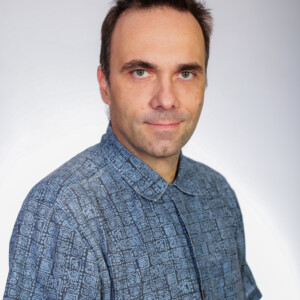
Pawel Dlotko
Dr. hab. Paweł Dłotko is the leader of the Topological Features of Data group as well as the leader of the Dioscuri Centre in Topological Data Analysis and Director of the International Research Agenda programme at the University of Warsaw. He previously worked at Swansea University, Inria Saclay, the University of Pennsylvania, and Jagiellonian University, where he graduated in 2012. His research lies at the interface of mathematics, computer science, and applied sciences, with a focus on rigorous methods that can be effectively implemented to address real-world problems.

Anna Gambin
Professor Anna Gambin is the Leader of Mathematical Foundation of AI in TRAILS and a professor at the Faculty of Mathematics, Informatics and Mechanics of the University of Warsaw. Her research focuses on bioinformatics and computational biology, particularly the analysis of genomic, proteomic, and spectrometric data, as well as applications of medical genomics in diagnostics.

Błażej Miasojedow
Dr hab. Błażej Miasojedow is the Leader of Effectiveness of Foundation Models Group in TRAILS and a mathematician and statistician at the Faculty of Mathematics, Informatics and Mechanics of the University of Warsaw. His research focuses on computational statistics, Markov chain Monte Carlo methods, Bayesian inference, stochastic algorithms, and high-dimensional statistical learning. He develops rigorous probabilistic and statistical methods for modern data analysis, with applications ranging from statistical learning to computational biology and interdisciplinary data-driven science.

Jacek Rogala
Dr hab. Jacek Rogala is the leader of Artificial Intelligence for Human Biology Group in TRAILS. He received his PhD from the Nencki Institute of Experimental Biology in 2014, where he specialised in computational modelling of visual cortex activity, and his habilitation from the Faculty of Physics at University of Warsaw in 2024. His research lies at the intersection of clinical neuroscience, machine learning and neuroaesthetics.